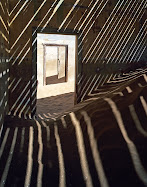
Workshop at Linhof & Studio

Paula and I will be running another LF workshop in Leigh on Sea in spring 2008. Details will be posted on the Linhof website in due course or if you just can't wait contact Paula on +44(0)1702 716116 for further details and to reserve a place.

Friday, 28 September 2007

Linhof & Studio September 2007 Large Format Workshop

I promised the participants of this workshop that I would upload a post for them to leave their comments and questions about the workshop and LF – so here it is! Please do ask me about anything arising from the workshop and I will try to answer it as soon as possible. I'm afraid that I will only be able to answer questions from the participants so the rest of you will just have to eavesdrop...

Friday, 31 August 2007

One hour to midnight...

Well, with three days to go it looks like I might actually get my text for the next book in on time so I thought I'd take a minute or two off to share another image from my trip to Norway with you both.

It occurred to me whilst I was in Norway that the lifestyle of landscape photographers has parallels with that of hunter-gatherers. Like hunter-gatherers, landscape photographers tend to lead a "nomadic" lifestyle, reliant upon the ability of a given natural environment to provide sufficient photographic opportunities in order to sustain our photography habit.

The variable availability of light and cloud, owing to local climatic and seasonal conditions, means that we are unlikely to stay in one place for long. Rather than bagging a kudu or digging a witchetty grub out of a eucalyptus tree I’m searching for a composition. Both ways of life sustain the individual but whereas the hunter gatherer is feeding their body I'm trying to feed my mind and spirit. Of course, many would claim that being a hunter gatherer is better for their soul (and waistlines!) than Western capitalist lifestyles.

Mmm, life's full of difficult decisions – a fresh wichetty grub or a new composition... I'll have mine toasted on the camp fire!

I'll be back next month, hopefully with something more insightful.

Sunday, 19 August 2007

Gone fishing...

Sorry for the lack of posts recently but I was away in Norway at the beginning of this month and I am now frantically trying to finish the text of my next book. Aaaarggghh...

So I'm afraid that I don't have any great personal philosophical insights to pass on (did I ever?) but I would like to draw your attention to a fascinating article by a painter called Martin Dace: Towards a new art

It's a wonderful and insightful critique of Postmodernism (well, see KK's post in comments for an alternative view!) and a plea to return to older values for art.

Please do post any comments you have on it and I'll give you my thoughts.

Back to the white hot keyboard (aalctuly olny luke wrsm as I can't tpye that fadt... well not accurately)

Sunday, 15 July 2007

A guilty pleasure?

I'm referring to showing my images in person to someone else – the prospect of which always makes me feel very nervous indeed. Yet, something still makes me go through the trauma of showing my photographs. Perhaps something about the process gives me pleasure? Am I just revelling in showing off, feeding my ego? I don't think so; it's a bittersweet experience for me, a mixture of anxiety and a hint of gratification. Of course it's the gratification that makes me feel guilty...

On the face of it, surely I should have nothing to worry about when sharing my images. I've been making photographs for close on 30 years, my images have been published in over 20 books and a number of magazines and I've achieved some recognition from my peers for the quality of my photography.

But worry I do. When presenting my images to an audience, large or small, I feel diffident; I worry that my images are unworthy, I worry that the audience won't like them – more than that they won't love them as wholeheartedly as I do.

Don't get me wrong, I don't love all my images and I'm not labouring under the misapprehension that those I do love are perfect. I know that they're not. I'm fully aware that even my favourite images have faults in composition or execution. In fact I'm painfully aware of this, its as plain and as haunting to me as a disfiguring ulcer on the face of a dear friend. I'm certainly more aware of the faults in the image than my audience are. Yet, despite their faults, I still love these chosen images. My images are the offspring of my creative spirit and I love them in the same way that I love my children: unconditionally.

I know deep in my heart that I've made a few images that will stand comparison with the best of my peers. I just don't want to shout about it (though I suppose my two readers might legitimately accuse me of at least whispering loudly through "Oceans..."). Why don't I want to be demonstrative? Is it because I'm English? The butterflies in my stomach let me know that I'm not exhibiting false modesty when I shrink from the limelight. If I were supremely confident but trying not to let my audience see that arrogance I wouldn't feel this bad. Paradoxically I feel confident and unsure at the same time; confident that my images are good but also unsure that they are good enough.

The reason for my fluctuating confidence might lie in part in the findings of a study by Dr. David Dunning at Cornell University. He looked at confidence in relation to ability levels. Dunning compared a group of students scores in a series of tests against their expectations. He found that those with the lowest scores consistently overestimated their abilities. More than that, Dunning's team also found that those with the highest scores consistently underestimated their abilities. The researchers put this down to "the fact that, in the absence of information about how others are doing, highly competent subjects assumed that others were performing as well as they were". I'm sure that this is partly true, but I also know from my own experience that the more I learn about photography the more I realise what there is still to learn. The more I know the smaller my precious hoard of knowledge looks and the more insignificant I feel.

Given my discomfort at showing my images in person, should I, perhaps, confine this activity to only showing them to people who's opinion I value? No, I don't think so. However unpleasant it is for me I need to show my work to as wide an audience as I am able and to listen to what they have to say. I've said before that self-criticism is an essential part of the creative process but I feel that peer review is also – and not just garnering the uncritical opinions of those you trust. That way lies a complete lack of perspective and the withering of creativity. I think that we've all seen this effect from afar in the work of certain pop musicians. There comes a critical point in some successful pop careers where the performer has amassed a considerable amount of money and acquired an entourage. If they are unwise they will have surrounded themselves with yes men;

"Do I look good in this outfit?"
"Yes!"
"Isn't my latest single great?"
"Yes!"
"Wouldn't it be great if I drove my Rolls into the swimming pool?"
"Yes!"
"I am the new messiah!"
"Yes you are!"

You get the picture...

It's been unspoken, perhaps even unconscious until now, but it occurs to me that the reason I show my images is not to feed my ego but to get a perspective on my work. It makes me anxious but I want to find out if I'm one of those incompetents in Dunning's study who is overestimating their ability or if there is some merit in what I'm doing. It would be foolhardy to grant all opinions equal weight but also equally foolhardy to dismiss out of hand those that are critical. There therefore needs to be some system of checks and balances. My approach has been to compare three sets of opinions; my own self-critical view, the opinions of a wider audience and finally the views of those members of my peer group whose work I admire. I tend to filter out opinions that are universally positive in favour of ones where I feel the respondent has made an effort at providing a critique.

The anxiety, then, comes from putting myself up for judgement, opening myself up for criticism. Gratification comes from any degree of validation of my work, especially if that approval comes from those members of my peer group who's work I admire.

So, is it a guilty pleasure? No, I don't think so. It's important to seek and find external positive feedback to counter the inevitable negative effect that arises even from constructive self-criticism. As photographers we need perspective and a context for our work beyond that provided by our own egos. But we also need encouragement if we aren't to become irretrievably disheartened. Showing my images is scary but I just have to grit my teeth and do it!

Saturday, 14 July 2007

“With the improvement in camera technology, you only need a good eye to be able to take an outstanding photograph. But this has made life difficult for the professionals, who have to be able to demonstrate that they are in a different league to the rest of us.”

Richard Ingram Independent on Saturday 14/7/2007

“With the improvement in writing implements (biros as opposed to styli), you only need a glib turn of phrase to be able to write a load of old tosh. But this has made life difficult for the professionals, who have to be able to demonstrate that they are in a different league to the rest of us.”

David Ward Oceans of Instants 14/7/2007

It still amazes me that otherwise seemingly intelligent people continue to completely misunderstand and misrepresent the process of making good photographs as opposed to happy snaps. I know that I've covered this before on "Oceans..." but it's not going to stop me writing about it again!

Let's look at what Ingram wrote one clause at a time...

“With the improvement in camera technology, ..."

Well, I can't argue that cameras have come a long way since you had to mix your own emulsion, apply it to a sheet of glass, expose without the help of a meter (really not that hard when the sensitivity of the emulsion was so low) and enter your dark tent to process the plate. All within the space of a few minutes, before the latent image degraded irretrievably. But the camera is just a tool, like a stylus or a biro or a quill. The camera doesn't make the image, the photographer does. Improvements in technology on their own only make it easier to make well exposed, badly composed images – as opposed to badly exposed and badly composed images. It's the composition that really matters, and that's the bit that technology can't help you with.

"...you only need a good eye to be able to take an outstanding photograph."

My problem here is with the word "only" – take "only" out and I might agree with this second clause. Ingram is using it here in the sense of "merely". It's like saying, "You only have to be a genius to understand quantum theory." Only implies that making an outstanding photograph is a simple thing, a breeze, just like falling off a log...

Count to ten... the hardest part of making a photograph is seeing the photograph. The completed photographic image, unlike other visual arts, gives no hint of the struggle or effort inherent in its making; it bears no makers marks such as brush strokes or the scoring of a stone chisel. It stands so utterly as a substitute for human vision that it is easy to believe that it has been created without any effort at all. Easy, but not true!

"But this has made life difficult for the professionals, who have to be able to demonstrate that they are in a different league to the rest of us.”

This so completely misrepresents reality that it is either breathtakingly naive or audaciously disingenuous ( I suspect the latter). The only thing that professional photographers have to do to demonstrate that they are in a "different league" is to convince hard-bitten commissioners of photography that they're worth spending money on. These people don't give up their money easily. The photographers have to deliver the goods! And the goods in this case are amazing images often made in exceptionally challenging conditions, technically or physically or both, such as a sports field or a theatre of war. How, I wonder , would Mr Ingram get on in Iraq with his technically improved camera? And let's not forget the amazing images made by non-professionals who also rely on a "good eye". Good photographers are good photographers, whether they're paid for it or not. "Professional" is an artificial distinction seized upon by Ingram merely so that he can bitch.

One final thought, if technology was really that important in making photographs why isn't the world awash with new Ansel Adams' or Robert Capas ?

Monday, 2 July 2007

My life as an Artist…

A number of my friends and peers (some are even both!) have been telling me for some time that I should, “Get out there more.” They want my work to reach a wider audience, they want me to be recognised (by whom?) for my contribution to photography (however minor) and they also want me to be financially rewarded for that contribution.

Well, obviously, one doesn’t want to turn down money – as my mother in law says, “Refuse nothing but blows!” We all have to find a way to pay our own way in the modern world but picking the right path can be tricky for some ways of life and particularly for an artist.

The eternal economic question that the individual must ask himself or herself is does one work to live or live to work? For the aspiring artist there should be no doubt that one lives to work – lives to create works might be a better way of putting it. The economic realm should be but a minor consideration for the artist. Few of us, however, have the willpower to turn our backs on financial reward or, even if we are unaffected by the lure of Mammon, to deprive those we love and support of material goods. Of course in the West this is usually a question of picking which “wants” to fulfil rather than which “needs”. The spiritual and moral integrity of what they are doing should be of much more importance to the artist.

It also seems to me that one of the things that is incumbent upon artists is to dream for those trapped in the secular, capitalist world of “proper” jobs. And, by that dreaming, open the eyes of others to new possibilities. It’s perhaps harder to have those dreams when one is a wage slave oneself.

But, in the last half century the artist has moved from dreamer to professional maker in a kind of reversal of the process that occurred during the Renaissance. From prehistory through to the late Middle Ages the artist was usually anonymous. They were artisans rather than celebrities. Their job was to fashion the work in much the same spirit as a blacksmith fashioned metal. Their tools were different but the product, like a horseshoe, had an acknowledged purpose within society. In the case of Art its job was to be educative or transcendental. The artist’s imagination was applied within prescribed limits. There was a tacit awareness that if they made the work too personal its functionality might be compromised, rather like a horseshoe with unnecessary curlicue decorations!

The Renaissance saw the rise of artist as individual, the rise of Artist as Celebrity. The celebrity artist was supported by a system of patronage; they had to sing for their suppers. Artists forged or were more likely offered relationships with rich and powerful benefactors who saw the advantage of a visible association with the intellectual and aesthetic high ground. This was much more often a political move rather than an altruistic one. The patrons weren’t supporting Art for Art’s sake but rather for what it could do for their social standing – much in the same way that in recent years the large corporations have sought relationships with the Art world and museums as a kind of high-brow PR exercise: we might be raping the rain forest but hey, look, we think Picasso is really cool!

By the middle of the 20th Century patronage by individuals had all but disappeared. The artist was left to fend for themselves in the hard commercial world, their work vying for the buyers’ attention with other more prosaic wants. Whereas throughout history Art had served a social purpose, from spiritual or religious through to expounding the dominant ideology, it was now just product.

Which leaves the artist with a bit of a dilemma. What exactly is their job in the Modern world? It doesn’t seem to be expounding a dominant ideology as, beyond “The individual is king”, there doesn’t seem to be one in the West anymore. Is it, then, asking awkward questions of the viewer by making so-called “anxious objects” or is it simply making decorative products? The former was certainly the position adopted by the Modernist avant-garde but commercial pressure seems to be forcing the latter position on artists in the post-modern era.

Most have chosen to ignore the problem by treating Art as just another professional realm, like medicine or law: a task to be performed efficiently, thoroughly and perhaps a little soullessly. The professionalization of Art has meant that economic concerns have become as important, if not more important, to the artist as aesthetic or social ones. In an Art world where anything goes, and the individual artist is king, whose to say whether a particular work of art is “good”? The arbiter has become the market place. How much a particular artist’s work sells for, the works’ extrinsic value, becomes more important than its intrinsic worth. If enough noise is made about an artist, if enough canny marketing applied to their “brand” then chances are they will become “successful” – if the measure of success is purely financial. The gallery owners, even more than art critics, are now the market makers. But what’s more important: the work or the hype?

It seems to me that there’s a huge problem here. The gallery system drives the market and demands a flow of product in order to maintain the flow of cash. Huge pressure is then placed on the artist just to churn out product and the quality of the work invariably suffers as a result.

Despite what Andy Warhol thought, as far as I’m concerned Art isn’t the same as cans of soup and I don’t feel that it has to be sold in the same fashion. When Alfred Stieglitz opened his gallery at 291 Fifth Avenue in New York in the early years of the last century he put belief in the work above commercial value. He sometimes doubled a work’s price, or refused to sell it, if he felt the buyer were just acquiring it as an investment; sometimes, if he were impressed with the buyer’s passion but they didn’t have deep enough pockets, he even sold a work at half price. Can you imagine a gallery today doing that?

Another question is also apparent; what happens to the quiet voice? What happens to the artist who lives to work, who places spiritual, aesthetic or intellectual inquiry above economic reward? Do these people even still exist? Well I certainly hope so as I consider myself amongst their number.

How is all this reflected in my life? The work has always come first for me. I didn’t become a photographer for the glamorous high-flying lifestyle (which is lucky because I haven’t found one!) I’m motivated by a sense of photographic enquiry, both intellectual and aesthetic, rather than by the money – again, lucky! All I’ve ever wanted to be as a photographer was the best that I could possibly be at making images. My friend, and peer, Joe Cornish once said to me that if you truly apply yourself to your art then eventually you will be recognized and rewarded. I’m not sure that van Gogh would agree with him… Sadly for my heirs an imminent demise wouldn’t boost the value of my images particularly – if you’re looking to market a myth tragically middle-aged just doesn’t cut it!

In case you’re getting an impression of me as a tortured ascetic that’s absolutely not me. I love my Art but I also love life. There are just some things I won’t do in order to make a buck. What I won’t do is make images simply because they have earnings potential, this covers a spectrum that ranges from chocolate box to the passionless approach of someone like Andreas Gursky. I’m intent on taking my own journey and making my own discoveries rather than following a well-trodden path.

So, like many others I suspect, I’ve reached a compromise that has entailed a dilution of my artistic effort. I have throughout most of my photographic career produced two distinctly different threads of work: commercial and personal. The former might best be characterised as being purely illustrative and the latter images that, however imperfectly, seek a level of transcendence. But as I approach 50 I’ve become increasingly frustrated with this workaround. I now want my cake and I want to eat it too! So I’m faced with finding a solution to the dilemma outlined above. Do I continue to split my efforts between commercial and personal work or do I throw myself on the mercy of the gallery system with the consequent potentially damaging professionalization of my personal work? And, in any case, little prospect as a photographer of finding commercial success. Or do I find a third way? I’ll let you know how the search is going…

Sunday, 17 June 2007

"Art, huh, what is it good for?"...(Part Two)

Following on from my last post on Art it seems appropriate to discuss a question posed at a recent talk I gave. A member of the audience asked, "Do you feel that it's your duty to lobby for protection of the environment through your work?" From her manner I think the enquirer was probably expecting a resounding, "Yes!" but I'm afraid that I disappointed her.

A deep love of the natural world is fundamental to my photography but I don't think that it's my job to act as a crude propagandist through my images. I'm happy to write or talk about respecting the creatures around us and protecting the future of our planet and, more than this, to follow this up (as imperfectly as humans do) by trying my best to "do my bit". But for me this debate doesn't have a place in my images, at least not in any unsophisticated and obvious way.

It seems to me that I was also being asked the question, "Why do you only make positive images of nature?" Well one strong reason is that I don't believe that making negative images of environmental destruction is going to change anything. Negative imagery is a turn off. Apart from a tiny minority of committed people everyone else looks the other way. They don't want to see bad things and adopt the visual equivalent of the fingers in the ears "La, la, la I can't hear you" pose.

A subtext of this question is an accusation that by making positive images of the natural world I am somehow complicit in the destruction that goes on everyday. I don't think so! This is a kind of "If you're not with us you're against us!" argument, a bullying attitude adopted by the radical tendency of many different political movements including the environmental one. I refuse to be bullied.

The word "duty" in the question is telling. Who or what do I owe a duty to? This question goes to the heart of the relationship between the public and private persona of the artist. In the minds of some there should be no separation between the public and private realm for an Artist; the Artist should live their Art. From this standpoint, since I am a lover of the natural world, it is my duty to proselytise; to convert the great unwashed to my point of view, to get them on-side in the crusade. Actually I think this is what I'm doing, but in a subtle way.

I make positive images and I refuse to apologise for that. The natural world makes me feel positive and that emotion is one of the prime reasons for me making images. I am convinced that positive emotions are much more likely to effect change than negative ones. Seeing something as beautiful is much more likely to motivate somebody to fight to protect that thing than seeing something as having already been despoiled is. It's simple human nature that negative images cause negative reactions. They cause the majority of viewers to withdraw from the debate because they feel the battle is already lost. Rather than causing an uprising, as the propagandists would have us believe they do, negative images are just too depressing and cause the majority of the populous to run and hide.

Portraying something in a positive light isn't necessarily denying that negative things are happening, it may be a denial but it doesn't have to be. Life is more complicated than that! I'm not advocating support for an apologist position, such as that of Nazi sympathiser Leni Riefenstahl. By making positive images of nature I'm not being an apologist for the governments and multi-nationals who are raping our planet. Saying that something is wonderful absolutely isn't the same as saying that it's OK to destroy it. In Riefenstahl's case she was praising the Nazis, the agent of destruction. If we transferred her position to landscape photography it would be like me praising a particular company or government that was implicated in an environmental disaster. It would be like me making heroic images of chain saws and earth moving equipment – that's not something you'll ever see me do!

The original question belongs, I think, to the Marxist tradition of seeing Art's role in quite simplistic terms as a kind of supercharged propaganda. I'm absolutely certain that Art can be deeply affecting on a personal level but I'm not convinced that it can work effectively as a means of changing the world on its own. Picasso's painting Guernica is probably the most famous piece of 20th century art inspired by a political will to protest, in this case against the Nazi bombing of a Spanish village. Did Guernica change the course of the Spanish Civil War to any significant degree? I don't think so. Visual Art is a weak tool when used against guns. The pen might be mightier than the sword, as Edward Lytton wrote in 1839, but I'm afraid that images aren't a match for armaments. Partly this is because it's just too easy to look the other way and partly it's because of a deeper philosophical problem: there is no consistent interpretation of a single image, no language in common between the artist and the viewer or even between one member of the audience and another. The message in Art and photography is too unfocused without written words, a caption, attached. The message is literally ineffable.

The visual arts can lend their weight to a debate but they're never going to be instrumental in causing a political u-turn. The will needs to be present already.

I want to show my wonder at the natural world and to explore notions of vision and perception through my images. I am not interested in creating images of the natural world whose sole purpose is to act as a polemic, I'll leave that to those who are more suited to it. Part of being an artist is about being true to oneself. If we force ourselves, or even worse are coerced, into producing Art to fit somebody else's agenda that work can only ever be third rate. Great works spring from the heart of the Artist, they are not imposed from outside. Saying that I don't want to make propaganda doesn't make me any less worthy as an artist or as a human being. That's a nonsensical argument; it's like accusing a plumber of being a bad person because they don't want to be a prima ballerina. If you're moved to make polemical work fine, if you're not that's equally fine. Art is big enough for both approaches.