Workshop at Linhof & Studio

Paula and I will be running another LF workshop in Leigh on Sea in spring 2008. Details will be posted on the Linhof website in due course or if you just can't wait contact Paula on +44(0)1702 716116 for further details and to reserve a place.
Showing posts with label winter. Show all posts

Sunday, 25 November 2007

A Photographer's Photograph?

I received a very interesting email from Oceans reader Adam musing on whether there are two classes of photograph; layman's photographs and photographer's photographs. Here (with his permission!) is his text in full for you to ponder on...

A few months ago a friend was looking at some of my photos and said of a fairly straightforward shot from Red Canyon (Utah) that it was a photographer’s photograph. I asked him to explain, and he said something about the way trees were placed around the image, the restricted colour palette (just green and hues of red) and lack of horizon (the sky was desperately bland that morning). I forgot about that conversation until recently, when as part of a discussion about photo clubs, someone else I know said that he would wish to avoid the “dreary photographer’s photography …. I'll lose the visual immediacy ….”. And this time I started thinking a bit more. What is it that makes an image arresting to the general viewer yet also evokes admiration from those who know about photography?

Let’s take the case of a wonderful landscape in dramatic light: as long as we can set up the tripod and point the camera in the right direction, then we will get a satisfactory image whether we use a simple digicam or LF big gun. It’s point and shoot, period. For this exercise I will ignore the problems of balancing out a dark foreground with bright sky etc.

But the enthusiast photographer could perhaps take a bit more care, think about using some elements of the foreground more effectively to strengthen the composition and add more impact. Perhaps using a rock the shape of which echoed that of a distant mountain. Here the photographer hopes to reproduce his own vision and uses some specialist equipment – a wide angle lens and a low viewpoint, or perhaps an LF camera with movements. By injecting his own vision, is he being creative and therefore moving towards being artistic? Well, I think yes if the resulting image is clearly more effective than that first point-&-shoot of what the photographer first saw.

As long as the image follows the conventionally accepted “rules” of composition, is sharp and well exposed, then the p&s as well as the more impactful image should get good marks from a photo club judge – and hopefully the second image will get a point or two more.

But let’s consider the case of pealing paint on a Tuscan door (forgive me DW!) where the subtle colours and textures contrast with the straight lines of the door structure. It’s a technical shot in that it would be difficult if not impossible to get the same image using cameras lacking the movements of LF. The rules of composition are probably irrelevant, the colours muted, the exposure spot on; what could or should a judge make of that? And what could an uninitiated viewer make of it? Unless the photographer manages to convey a sense of the feeling or emotion he experienced when he saw that door, the image will fail: better days gone by, current dereliction, abandonment, someone’s handiwork going to ruin…. Otherwise, it’s just a shot of a door, a so-called record shot and will be judged on that basis. Many non-photographers might just walk on by to the next print on the wall.

Or what about an abstraction from nature, perhaps detail from some colourful tree bark or contrasting colours of lichen and rock. Again the composition will probably not follow the conventional rules, and might leave the viewer to wander around the image noticing little details here and there. Some effort may be necessary and go beyond the "wow" of colours and textures to realise what the image is. Here David’s Detail at Poverty Flats in Utah is a wonderful example.

Are these last two photographer’s photographs? Possibly, but they are not necessarily dreary (certainly not the Detail). Conversely, I have seen some wonderful strong images full of passion being panned by judges for being composed not quite on the rule of thirds, or with the exposure “too dark” despite thereby separating the main subject from its background. Here the judge was seemingly looking precisely for conventional photographer’s photographs and didn't know how to react to something different. And it is that tendency to judge an image against a set of "rules" which strangles original photographic interpretation of the beauty around us.

So, what do I feel?

It's obvious that the interpretation of any image is dependent upon the level of sophistication of the viewer. An expert in Renaissance Art would certainly have a richer experience when viewing the Mona Lisa than the mythical man in the street would. The important question is should I, as a photographer aspiring to art rather than illustration, be worried that some people don't 'get' my images. I think the answer has to be a resounding "No!" This doesn't mean that I'm being elitist. I feel that my images are accessible on a number of different levels. Some viewers will only appreciate the colours or form, some think about the relationship of negative to positive space, some see references to other forms of art, some be lost in what the image evokes for them, some all of the above and more. It doesn't matter whether a viewer accesses the image on one, two or all available levels. It doesn't ultimately matter if an individual viewer isn't moved by a particular image. Neither Picasso nor van Gogh nor Monet nor Turner nor Whistler nor Mondrian nor Pollock were exactly populist for large parts of their carreers. Yet now their works are accepted as important milestones in the history of art. Popularity alone has never been a sign of quality. What would matter was if no one other than the photographer was moved by the images that they made.

I certainly don't worry that camera club judges might mark me down for not using the "rule of thirds" (this is a merely a degenerate bastardisation of the more subtle Golden Section and the fact that they probably don't know this only shows up their ignorance). Art isn't about formulas, it's not something that should be constrained by rules in this way. That doesn't mean that certain approaches aren't better than others, they obviously are. It just means that the whole exercise is more subtle and rich than any rule might suggest. Of course the real reason that judges apply rules is so that there can be some standards for comparison. And here's the fundamental flaw in the whole exercise. The appreciation of any work of art must necessarily be relative not absolute. One man's 10/10 is another's 2/10. The range of possible connotations in any image are too wide and subtle. Trying to constrain the possibilities for solving the three dimensional puzzle of composition by constraining the outcome using rules is a denial of the existence of these subtle signs. It shows a paucity of vision. There cannot be a consistent system for making an absolute comparison between one image and another. Period.

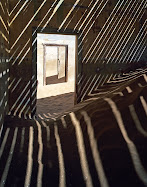
Are there photographer's photographs? Absolutely! If there weren't it would show that no one had really explored the possibilities for the medium beyond bland illustration, beyond the postcard. I feel that the image at the top of this post might well fall into the category of photographer's photograph. The only downside that I can see is that these images are probably less commercial than ones that are more straightforward.

Saturday, 14 July 2007

“With the improvement in camera technology, you only need a good eye to be able to take an outstanding photograph. But this has made life difficult for the professionals, who have to be able to demonstrate that they are in a different league to the rest of us.”

Richard Ingram Independent on Saturday 14/7/2007

“With the improvement in writing implements (biros as opposed to styli), you only need a glib turn of phrase to be able to write a load of old tosh. But this has made life difficult for the professionals, who have to be able to demonstrate that they are in a different league to the rest of us.”

David Ward Oceans of Instants 14/7/2007

It still amazes me that otherwise seemingly intelligent people continue to completely misunderstand and misrepresent the process of making good photographs as opposed to happy snaps. I know that I've covered this before on "Oceans..." but it's not going to stop me writing about it again!

Let's look at what Ingram wrote one clause at a time...

“With the improvement in camera technology, ..."

Well, I can't argue that cameras have come a long way since you had to mix your own emulsion, apply it to a sheet of glass, expose without the help of a meter (really not that hard when the sensitivity of the emulsion was so low) and enter your dark tent to process the plate. All within the space of a few minutes, before the latent image degraded irretrievably. But the camera is just a tool, like a stylus or a biro or a quill. The camera doesn't make the image, the photographer does. Improvements in technology on their own only make it easier to make well exposed, badly composed images – as opposed to badly exposed and badly composed images. It's the composition that really matters, and that's the bit that technology can't help you with.

"...you only need a good eye to be able to take an outstanding photograph."

My problem here is with the word "only" – take "only" out and I might agree with this second clause. Ingram is using it here in the sense of "merely". It's like saying, "You only have to be a genius to understand quantum theory." Only implies that making an outstanding photograph is a simple thing, a breeze, just like falling off a log...

Count to ten... the hardest part of making a photograph is seeing the photograph. The completed photographic image, unlike other visual arts, gives no hint of the struggle or effort inherent in its making; it bears no makers marks such as brush strokes or the scoring of a stone chisel. It stands so utterly as a substitute for human vision that it is easy to believe that it has been created without any effort at all. Easy, but not true!

"But this has made life difficult for the professionals, who have to be able to demonstrate that they are in a different league to the rest of us.”

This so completely misrepresents reality that it is either breathtakingly naive or audaciously disingenuous ( I suspect the latter). The only thing that professional photographers have to do to demonstrate that they are in a "different league" is to convince hard-bitten commissioners of photography that they're worth spending money on. These people don't give up their money easily. The photographers have to deliver the goods! And the goods in this case are amazing images often made in exceptionally challenging conditions, technically or physically or both, such as a sports field or a theatre of war. How, I wonder , would Mr Ingram get on in Iraq with his technically improved camera? And let's not forget the amazing images made by non-professionals who also rely on a "good eye". Good photographers are good photographers, whether they're paid for it or not. "Professional" is an artificial distinction seized upon by Ingram merely so that he can bitch.

One final thought, if technology was really that important in making photographs why isn't the world awash with new Ansel Adams' or Robert Capas ?

Sunday, 3 June 2007

To paraphrase Edwin Starr, "Art, huh, what is it good for?"... (Part One)

I've spent quite a long time as a photographer pondering on the nature of Art; just what is Art? And specifically I've been seeking to find photography's place in the wider world of Art: not to mention justifying it as Art to a few people! But in the last few weeks (and some might say this is a little late in the day) I've begun to ponder not, "What is Art?" but rather "What should it do?"

I guess the reason it has taken me so long to get around to asking this question is that I was always comfortable with what Art (read photography) did for me. More than that it was bloody obvious! Making photographs allowed me to express myself and viewing Art taught me about other ways of seeing. But what does my photography do for other people? What is the use of Art to society as a whole?

Time was, before photography, before the Avant Garde and Modernism, that Art in the Western world served as a kind of social glue. Paintings and sculpture were used to disseminate throughout society the ideas of the social elite, be they secular or religious leaders. Works of Art contained both explicit and hidden allegorical meanings, often referring to Biblical or Greek sources. There were great Artists but they were subordinate to Art, gifted interpreters and innovators but never the Source of Art.

Then along came Modernism... And Western Art split into a thousand movements, each with their own agenda, each with their own view, each more inward looking than the last. Ultimately Art in the Modernist era became about the individual, it became a celebration of the unique vision of the gifted Artist. Art was whatever an Artist said it was. You might be forgiven for thinking that this was a liberating advance, a break away from the stranglehold of the ruling elite, a chance for us all to have our say. But I don't think it quite worked out like that...

Art for Art's sake became a joke, a practice so inward looking that it disappeared up it's own fundament. Society as a whole came to distrust Modern Art, it was viewed as an elite club that had turned its back on the rest of us. Only Artists could understand Art so why bother to talk to the Great Unwashed? Capitalism seized the opportunity offered by Art's fractured disarray to commoditize it. As Andy Warhol knowingly pointed out, Art had become just another good like Campbells Soup. A proliferation of brands followed, artists who actually made a living from their works climbed from a few hundred across the entire US in the 1950's to thousands in New York City alone by the mid 1980's. One has to ask what benefit did this explosion of expression do society as a whole?

But the Modernists didn't get it all there own way; another "M'ism" had a lot to say about what Art's purpose should be. Marxism held that Art's job was to shed light on human existence; to explain and, at the same time, ease our pain. Artists, such as the Abstract Expressionists, who turned inward, offering no commentary and excluding references to the outside world, were exhibiting the worst kind of decadent behaviour in the eyes of the Marxists. All very worthy but is human existence solely concerned with our relationships with other human beings? The answer is plainly no, so surely Art should have a wider remit.

I believe that there must be room for a middle path between the solipsism of Modernism and the Marxist directive for Art to concentrate on the social world. Surely these are just different forms of anthropocentrism, both equally self-centred. What's wrong with Art looking at the natural world. Not the capitalised, mystical Nature celebrated by Ansel Adams et al but simply the environments that gave birth to Humanity. The natural world is held in common and offers a much wider realm than mankind. It surely can't be true that Art has exhausted the possibilities for exploration and expression encompassed by the planet around us.

There are moments when I'm standing waiting to make an image when I feel completely connected to the world around me; connected to the soil or rock at my feet, connected to the air moving across my body, connected to the birds flying through the air. Those moments are what I seek to capture in my images, to share them with a wider audience and hopefully to evoke a response in return. I make my images for me but not because I want to be inward looking. The work of an artist must be intensely personal if it is to carry any force but it doesn't have to be exclusive.

I'm not sure that I've come to a definitive answer about "What should Art do?" but I think I can definitely make a stab at explaining its role for me. Art shouldn't become so wrapped up in its own concerns that it becomes incomprehensible to a wider audience, it should be inclusive and not alienating, it should express the feelings and ideas of the Artist and, at its best, it should change how we see the world around us. Quite a wish list but one I'm happy to try and aspire to.

Edwin Starr's famous song continued with, "Absolutely nothing, say it again!" This might have applied to Art under the reign of Modernism but I think it's time we claimed it back for a populist audience.

See Part Two here

Friday, 9 March 2007

The T-shirt winner...

At the tender age of 46 I've finally won a photography competition (the first and, so far, only competition I've entered) at choose-film.com.

I've very mixed feelings about this. On the one hand it's deeply satisfying to be patted on the back and told that one has done well, especially as in this case the 'award' was received as a result of voting on the site by my peers. Artists of all flavours are deeply insecure creatures driven to some extent by their egos. Self-criticism is a vital part of the artistic process but it's a tricky balancing act that can lead to us all attacking our own work as worthless. Inciteful external criticism is always valuable and can help us to avoid the deep lows and achieve new heights both in our mood and in the quality of our work.

On the other hand I'm philosophically opposed to the basic concept of photo competitions. Photography, like all art forms, cannot be judged in an absolute way. Photography is a matter of taste. How one feels about an image is just that, a feeling. It cannot be categorically stated that one image is better than another. The work of one great master, such as Ansel Adams, cannot be said to be better than that of another, such as Edward Weston. They are simply different.
Achnahaird Salt Flats

Continuing the winter theme from my last post...

I'm often asked by workshop participants to give them the secrets of good composition, "What are the rules?" they ask. In reply I usually paraphrase a comment made by Edward Weston, "To consult the rules of composition before making a photograph is a little like consulting the law of gravity before going for a walk. Irrelevant!"

For me the very best images always break the rules, they surprise the viewer with a new way of seeing the world. What intrigued me about this view was that the fabric of the landscape appears to be almost wafer thin – a tear in the fabric allows us to glimpse sky below and beyond the surface of the ground. Visual ambiguity in a photograph can not only be arresting but also adds a sense of mystery. Humans have evolved to seek early resolution to visual problems and where this isn't possible an image will hold the viewer's attention for longer – think of the work M.C. Escher such as the hooded figures ascending a neverending staircase. So, rather than seeking to describe the landscape in a way that is instantly understood we would do better to try and confound the viewer's expectations. Rules are never going to get us to this point!