Workshop at Linhof & Studio

Paula and I will be running another LF workshop in Leigh on Sea in spring 2008. Details will be posted on the Linhof website in due course or if you just can't wait contact Paula on +44(0)1702 716116 for further details and to reserve a place.
Showing posts with label water. Show all posts

Tuesday, 1 January 2008

Wishing all my readers a prosperous, creative and happy 2008...

May you all have great light, make amazing images and contribute to the discussion here on Oceans of Instants!

Thursday, 29 November 2007

To make or not to make...

On a recent trip to Scotland with a workshop group we twice visited Loch Clair in Glen Torridon for dawn. On both occasions the light was stunning, with the mountain Liathach bathed in a deep red glow for around ten to fifteen minutes – a time period consistent with an LF photographer being able to capture an image! On the group's second visit the cloudscape was amongst the finest that I have ever witnessed. On both occasions the other photographers in the group worked feverishly to capture something of the beauty laid out before them. Yet I found myself unmotivated to make an image. The scene was sublime yet, despite the abundant water, it singularly failed to float my boat.

I began to think that perhaps there was something wrong with me (highly likely). What exactly was stopping me making a picture. I know I'm not known as 'Mr Vista' but I do like a wide view so that didn't seem a likely explanation. There had to be something about this particular wide view that was inhibiting the action of my trigger finger. This worried me for the rest of the workshop. As a landscape photographer how could I not make an image of such an amazing sight? One thought was that maybe it was because I'd seen it before. In truth, not this particular view but similar ones. I don't like to feel that I'm repeating myself so I often conduct a kind of internal examination (ooh, err missus!) of my motives to make sure that I'm not taking the easy route and treading exactly the same well worn path. To add another twist, it had long been an ambition of mine to make an image across Loch Clair in great dawn light. Yet I literally couldn't make the image. No matter how hard part of me wanted to I couldn't bring myself to put the camera on the tripod. Perhaps I was just losing enthusiasm for landscape photography, becoming jaded after years of chasing the light. Perhaps it was time to pack away the dark cloth...

Then, a few days later (on a different continent) a scene grabbed me by the throat and I felt compelled to make an image. Any thoughts of being jaded disappeared in the instant that I recognised the possibility for the image. No longer "a washed up has-been" I returned to the problem of why I couldn't make the earlier image. It occurred to me that though I had hugely enjoyed the experience of those dawns I had also instinctively known that any image I made would be a pale ghost of the depth of feeling that I had experienced. What I had experienced was literally ineffable and any image of it would lack depth and subtlety. It would have had an undeniable attractive, but superficial, gloss imparted by the amazing light but in fact the strength of that light would be counter productive; any hope for subtlety and richness drowned in a crimson flood. Evocations beyond 'Gosh!' or 'warm' beaten to a blood red pulp. The point I'm trying to make is that sometimes you can't say what you feel in a single image. Its range is too poor, its sensory inputs too restricted. I'm not likely to take up cinematography any time soon but it is important to realise the limits.

Like many things it's blindingly obvious once you know it. But it surprised me that it has taken me quite so long to make the realisation. Obviously I've been 'not-making' images for decades, taking the decision to move on and find something else. But usually this was because the subject failed some quality test of my own devising or that what I was striving to achieve was beyond my reach technically, not because simply it was too good. Perhaps it's just another excuse to not take the camera out of the bag, or perhaps it's a sign of some late-found maturity in my photography. I hope it may be.

Sunday, 25 November 2007

A Photographer's Photograph?

I received a very interesting email from Oceans reader Adam musing on whether there are two classes of photograph; layman's photographs and photographer's photographs. Here (with his permission!) is his text in full for you to ponder on...

A few months ago a friend was looking at some of my photos and said of a fairly straightforward shot from Red Canyon (Utah) that it was a photographer’s photograph. I asked him to explain, and he said something about the way trees were placed around the image, the restricted colour palette (just green and hues of red) and lack of horizon (the sky was desperately bland that morning). I forgot about that conversation until recently, when as part of a discussion about photo clubs, someone else I know said that he would wish to avoid the “dreary photographer’s photography …. I'll lose the visual immediacy ….”. And this time I started thinking a bit more. What is it that makes an image arresting to the general viewer yet also evokes admiration from those who know about photography?

Let’s take the case of a wonderful landscape in dramatic light: as long as we can set up the tripod and point the camera in the right direction, then we will get a satisfactory image whether we use a simple digicam or LF big gun. It’s point and shoot, period. For this exercise I will ignore the problems of balancing out a dark foreground with bright sky etc.

But the enthusiast photographer could perhaps take a bit more care, think about using some elements of the foreground more effectively to strengthen the composition and add more impact. Perhaps using a rock the shape of which echoed that of a distant mountain. Here the photographer hopes to reproduce his own vision and uses some specialist equipment – a wide angle lens and a low viewpoint, or perhaps an LF camera with movements. By injecting his own vision, is he being creative and therefore moving towards being artistic? Well, I think yes if the resulting image is clearly more effective than that first point-&-shoot of what the photographer first saw.

As long as the image follows the conventionally accepted “rules” of composition, is sharp and well exposed, then the p&s as well as the more impactful image should get good marks from a photo club judge – and hopefully the second image will get a point or two more.

But let’s consider the case of pealing paint on a Tuscan door (forgive me DW!) where the subtle colours and textures contrast with the straight lines of the door structure. It’s a technical shot in that it would be difficult if not impossible to get the same image using cameras lacking the movements of LF. The rules of composition are probably irrelevant, the colours muted, the exposure spot on; what could or should a judge make of that? And what could an uninitiated viewer make of it? Unless the photographer manages to convey a sense of the feeling or emotion he experienced when he saw that door, the image will fail: better days gone by, current dereliction, abandonment, someone’s handiwork going to ruin…. Otherwise, it’s just a shot of a door, a so-called record shot and will be judged on that basis. Many non-photographers might just walk on by to the next print on the wall.

Or what about an abstraction from nature, perhaps detail from some colourful tree bark or contrasting colours of lichen and rock. Again the composition will probably not follow the conventional rules, and might leave the viewer to wander around the image noticing little details here and there. Some effort may be necessary and go beyond the "wow" of colours and textures to realise what the image is. Here David’s Detail at Poverty Flats in Utah is a wonderful example.

Are these last two photographer’s photographs? Possibly, but they are not necessarily dreary (certainly not the Detail). Conversely, I have seen some wonderful strong images full of passion being panned by judges for being composed not quite on the rule of thirds, or with the exposure “too dark” despite thereby separating the main subject from its background. Here the judge was seemingly looking precisely for conventional photographer’s photographs and didn't know how to react to something different. And it is that tendency to judge an image against a set of "rules" which strangles original photographic interpretation of the beauty around us.

So, what do I feel?

It's obvious that the interpretation of any image is dependent upon the level of sophistication of the viewer. An expert in Renaissance Art would certainly have a richer experience when viewing the Mona Lisa than the mythical man in the street would. The important question is should I, as a photographer aspiring to art rather than illustration, be worried that some people don't 'get' my images. I think the answer has to be a resounding "No!" This doesn't mean that I'm being elitist. I feel that my images are accessible on a number of different levels. Some viewers will only appreciate the colours or form, some think about the relationship of negative to positive space, some see references to other forms of art, some be lost in what the image evokes for them, some all of the above and more. It doesn't matter whether a viewer accesses the image on one, two or all available levels. It doesn't ultimately matter if an individual viewer isn't moved by a particular image. Neither Picasso nor van Gogh nor Monet nor Turner nor Whistler nor Mondrian nor Pollock were exactly populist for large parts of their carreers. Yet now their works are accepted as important milestones in the history of art. Popularity alone has never been a sign of quality. What would matter was if no one other than the photographer was moved by the images that they made.

I certainly don't worry that camera club judges might mark me down for not using the "rule of thirds" (this is a merely a degenerate bastardisation of the more subtle Golden Section and the fact that they probably don't know this only shows up their ignorance). Art isn't about formulas, it's not something that should be constrained by rules in this way. That doesn't mean that certain approaches aren't better than others, they obviously are. It just means that the whole exercise is more subtle and rich than any rule might suggest. Of course the real reason that judges apply rules is so that there can be some standards for comparison. And here's the fundamental flaw in the whole exercise. The appreciation of any work of art must necessarily be relative not absolute. One man's 10/10 is another's 2/10. The range of possible connotations in any image are too wide and subtle. Trying to constrain the possibilities for solving the three dimensional puzzle of composition by constraining the outcome using rules is a denial of the existence of these subtle signs. It shows a paucity of vision. There cannot be a consistent system for making an absolute comparison between one image and another. Period.

Are there photographer's photographs? Absolutely! If there weren't it would show that no one had really explored the possibilities for the medium beyond bland illustration, beyond the postcard. I feel that the image at the top of this post might well fall into the category of photographer's photograph. The only downside that I can see is that these images are probably less commercial than ones that are more straightforward.

Saturday, 24 November 2007

Long time no post...

Where did two and a half months (since my last 'serious' post) go to?!? Perhaps I'm just having a senior moment... but, no. I do recall. Since I last visited you and the other reader I have been engaged in various projects for Light & Land as well as finishing off work on my next book Landscape Beyond.

The text for this was finished back in August but the final image selection and layouts weren't completed until late October. I'm relieved to say that it has now gone off to the printers – though not as relieved as the tireless Eddie Ephraums who has done a sterling job despite my interference/involvement in all stages of the process.

So, how do I feel about my new baby? Well in some respects I think that I'm still too close to it to judge properly. I'm reasonably pleased with the images but don't feel that I can really judge the text yet. I think that this book is more personal than Landscape Within and I felt more outside my comfort zone than when I wrote LW. I owe a big thank you to Eddie for the inspiration for the book. When he and I first sat down to talk about my "difficult second album" he asked me to name the three attributes that I felt essential in the creation of a great landscape photograph. I surprised myself by instantly responding, "Simplicity, mystery and beauty." And a book concept was born. Of course the tricky part was writing the text...

The images used were largely already made. I like to approach the making of a book with a set of images from my 'library' rather than shooting to illustrate the text. I find that this suits me for a number of reasons. Firstly, I'm not the most prolific photographer and the idea of making a set of images to order is frankly very scary. Secondly, because the images aren't meant to be literal illustrations of the text but to stand as works on their own there really isn't the need to shoot specifically to fulfill the brief. For me, the words and images work together and separately, they are interleaved but distinct.

The inspiration for each of my images comes from the circumstances of its making rather than from some grand plan. In fact I find it more or less impossible to make anything other than bland illustrations if I have an external structure imposed before I make an image. Some might see this as a weakness: it means that I feel unable to work on image series. I tend to feel that my photographic work to date is in a sense one very large series charting my explorations in photography. There are many examples of artists having periods working on the same or similar subjects (Picasso's Blue Period is perhaps the most famous) and I do this too. I make series inadvertently (and each image is widely separated in time) because I have a 'weakness' for certain subjects such as ferns or windows. I often worry that rather than working through my approach to a topic I might simply be pointlessly repeating myself. Yet, just when this feeling gets really strong I usually find some new approach and reveal something new to myself and hopefully whoever views the images. Perhaps I should go away and think on this some more...

In between work on the book I've made two trips across the pond to visit the Canadian Rockies in September and Montana & Wyoming. Both were reasonably successful photographically (the image above was made at Biscuit Basin in Yellowstone) and I'll write more on them in future posts.

Saturday, 14 July 2007

“With the improvement in camera technology, you only need a good eye to be able to take an outstanding photograph. But this has made life difficult for the professionals, who have to be able to demonstrate that they are in a different league to the rest of us.”

Richard Ingram Independent on Saturday 14/7/2007

“With the improvement in writing implements (biros as opposed to styli), you only need a glib turn of phrase to be able to write a load of old tosh. But this has made life difficult for the professionals, who have to be able to demonstrate that they are in a different league to the rest of us.”

David Ward Oceans of Instants 14/7/2007

It still amazes me that otherwise seemingly intelligent people continue to completely misunderstand and misrepresent the process of making good photographs as opposed to happy snaps. I know that I've covered this before on "Oceans..." but it's not going to stop me writing about it again!

Let's look at what Ingram wrote one clause at a time...

“With the improvement in camera technology, ..."

Well, I can't argue that cameras have come a long way since you had to mix your own emulsion, apply it to a sheet of glass, expose without the help of a meter (really not that hard when the sensitivity of the emulsion was so low) and enter your dark tent to process the plate. All within the space of a few minutes, before the latent image degraded irretrievably. But the camera is just a tool, like a stylus or a biro or a quill. The camera doesn't make the image, the photographer does. Improvements in technology on their own only make it easier to make well exposed, badly composed images – as opposed to badly exposed and badly composed images. It's the composition that really matters, and that's the bit that technology can't help you with.

"...you only need a good eye to be able to take an outstanding photograph."

My problem here is with the word "only" – take "only" out and I might agree with this second clause. Ingram is using it here in the sense of "merely". It's like saying, "You only have to be a genius to understand quantum theory." Only implies that making an outstanding photograph is a simple thing, a breeze, just like falling off a log...

Count to ten... the hardest part of making a photograph is seeing the photograph. The completed photographic image, unlike other visual arts, gives no hint of the struggle or effort inherent in its making; it bears no makers marks such as brush strokes or the scoring of a stone chisel. It stands so utterly as a substitute for human vision that it is easy to believe that it has been created without any effort at all. Easy, but not true!

"But this has made life difficult for the professionals, who have to be able to demonstrate that they are in a different league to the rest of us.”

This so completely misrepresents reality that it is either breathtakingly naive or audaciously disingenuous ( I suspect the latter). The only thing that professional photographers have to do to demonstrate that they are in a "different league" is to convince hard-bitten commissioners of photography that they're worth spending money on. These people don't give up their money easily. The photographers have to deliver the goods! And the goods in this case are amazing images often made in exceptionally challenging conditions, technically or physically or both, such as a sports field or a theatre of war. How, I wonder , would Mr Ingram get on in Iraq with his technically improved camera? And let's not forget the amazing images made by non-professionals who also rely on a "good eye". Good photographers are good photographers, whether they're paid for it or not. "Professional" is an artificial distinction seized upon by Ingram merely so that he can bitch.

One final thought, if technology was really that important in making photographs why isn't the world awash with new Ansel Adams' or Robert Capas ?

Sunday, 17 June 2007

"Art, huh, what is it good for?"...(Part Two)
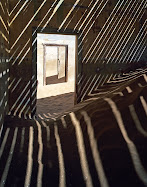
Following on from my last post on Art it seems appropriate to discuss a question posed at a recent talk I gave. A member of the audience asked, "Do you feel that it's your duty to lobby for protection of the environment through your work?" From her manner I think the enquirer was probably expecting a resounding, "Yes!" but I'm afraid that I disappointed her.

A deep love of the natural world is fundamental to my photography but I don't think that it's my job to act as a crude propagandist through my images. I'm happy to write or talk about respecting the creatures around us and protecting the future of our planet and, more than this, to follow this up (as imperfectly as humans do) by trying my best to "do my bit". But for me this debate doesn't have a place in my images, at least not in any unsophisticated and obvious way.

It seems to me that I was also being asked the question, "Why do you only make positive images of nature?" Well one strong reason is that I don't believe that making negative images of environmental destruction is going to change anything. Negative imagery is a turn off. Apart from a tiny minority of committed people everyone else looks the other way. They don't want to see bad things and adopt the visual equivalent of the fingers in the ears "La, la, la I can't hear you" pose.

A subtext of this question is an accusation that by making positive images of the natural world I am somehow complicit in the destruction that goes on everyday. I don't think so! This is a kind of "If you're not with us you're against us!" argument, a bullying attitude adopted by the radical tendency of many different political movements including the environmental one. I refuse to be bullied.

The word "duty" in the question is telling. Who or what do I owe a duty to? This question goes to the heart of the relationship between the public and private persona of the artist. In the minds of some there should be no separation between the public and private realm for an Artist; the Artist should live their Art. From this standpoint, since I am a lover of the natural world, it is my duty to proselytise; to convert the great unwashed to my point of view, to get them on-side in the crusade. Actually I think this is what I'm doing, but in a subtle way.

I make positive images and I refuse to apologise for that. The natural world makes me feel positive and that emotion is one of the prime reasons for me making images. I am convinced that positive emotions are much more likely to effect change than negative ones. Seeing something as beautiful is much more likely to motivate somebody to fight to protect that thing than seeing something as having already been despoiled is. It's simple human nature that negative images cause negative reactions. They cause the majority of viewers to withdraw from the debate because they feel the battle is already lost. Rather than causing an uprising, as the propagandists would have us believe they do, negative images are just too depressing and cause the majority of the populous to run and hide.

Portraying something in a positive light isn't necessarily denying that negative things are happening, it may be a denial but it doesn't have to be. Life is more complicated than that! I'm not advocating support for an apologist position, such as that of Nazi sympathiser Leni Riefenstahl. By making positive images of nature I'm not being an apologist for the governments and multi-nationals who are raping our planet. Saying that something is wonderful absolutely isn't the same as saying that it's OK to destroy it. In Riefenstahl's case she was praising the Nazis, the agent of destruction. If we transferred her position to landscape photography it would be like me praising a particular company or government that was implicated in an environmental disaster. It would be like me making heroic images of chain saws and earth moving equipment – that's not something you'll ever see me do!

The original question belongs, I think, to the Marxist tradition of seeing Art's role in quite simplistic terms as a kind of supercharged propaganda. I'm absolutely certain that Art can be deeply affecting on a personal level but I'm not convinced that it can work effectively as a means of changing the world on its own. Picasso's painting Guernica is probably the most famous piece of 20th century art inspired by a political will to protest, in this case against the Nazi bombing of a Spanish village. Did Guernica change the course of the Spanish Civil War to any significant degree? I don't think so. Visual Art is a weak tool when used against guns. The pen might be mightier than the sword, as Edward Lytton wrote in 1839, but I'm afraid that images aren't a match for armaments. Partly this is because it's just too easy to look the other way and partly it's because of a deeper philosophical problem: there is no consistent interpretation of a single image, no language in common between the artist and the viewer or even between one member of the audience and another. The message in Art and photography is too unfocused without written words, a caption, attached. The message is literally ineffable.

The visual arts can lend their weight to a debate but they're never going to be instrumental in causing a political u-turn. The will needs to be present already.

I want to show my wonder at the natural world and to explore notions of vision and perception through my images. I am not interested in creating images of the natural world whose sole purpose is to act as a polemic, I'll leave that to those who are more suited to it. Part of being an artist is about being true to oneself. If we force ourselves, or even worse are coerced, into producing Art to fit somebody else's agenda that work can only ever be third rate. Great works spring from the heart of the Artist, they are not imposed from outside. Saying that I don't want to make propaganda doesn't make me any less worthy as an artist or as a human being. That's a nonsensical argument; it's like accusing a plumber of being a bad person because they don't want to be a prima ballerina. If you're moved to make polemical work fine, if you're not that's equally fine. Art is big enough for both approaches.