Workshop at Linhof & Studio

Paula and I will be running another LF workshop in Leigh on Sea in spring 2008. Details will be posted on the Linhof website in due course or if you just can't wait contact Paula on +44(0)1702 716116 for further details and to reserve a place.
Showing posts with label hand of man. Show all posts

Sunday, 25 November 2007

A Photographer's Photograph?

I received a very interesting email from Oceans reader Adam musing on whether there are two classes of photograph; layman's photographs and photographer's photographs. Here (with his permission!) is his text in full for you to ponder on...

A few months ago a friend was looking at some of my photos and said of a fairly straightforward shot from Red Canyon (Utah) that it was a photographer’s photograph. I asked him to explain, and he said something about the way trees were placed around the image, the restricted colour palette (just green and hues of red) and lack of horizon (the sky was desperately bland that morning). I forgot about that conversation until recently, when as part of a discussion about photo clubs, someone else I know said that he would wish to avoid the “dreary photographer’s photography …. I'll lose the visual immediacy ….”. And this time I started thinking a bit more. What is it that makes an image arresting to the general viewer yet also evokes admiration from those who know about photography?

Let’s take the case of a wonderful landscape in dramatic light: as long as we can set up the tripod and point the camera in the right direction, then we will get a satisfactory image whether we use a simple digicam or LF big gun. It’s point and shoot, period. For this exercise I will ignore the problems of balancing out a dark foreground with bright sky etc.

But the enthusiast photographer could perhaps take a bit more care, think about using some elements of the foreground more effectively to strengthen the composition and add more impact. Perhaps using a rock the shape of which echoed that of a distant mountain. Here the photographer hopes to reproduce his own vision and uses some specialist equipment – a wide angle lens and a low viewpoint, or perhaps an LF camera with movements. By injecting his own vision, is he being creative and therefore moving towards being artistic? Well, I think yes if the resulting image is clearly more effective than that first point-&-shoot of what the photographer first saw.

As long as the image follows the conventionally accepted “rules” of composition, is sharp and well exposed, then the p&s as well as the more impactful image should get good marks from a photo club judge – and hopefully the second image will get a point or two more.

But let’s consider the case of pealing paint on a Tuscan door (forgive me DW!) where the subtle colours and textures contrast with the straight lines of the door structure. It’s a technical shot in that it would be difficult if not impossible to get the same image using cameras lacking the movements of LF. The rules of composition are probably irrelevant, the colours muted, the exposure spot on; what could or should a judge make of that? And what could an uninitiated viewer make of it? Unless the photographer manages to convey a sense of the feeling or emotion he experienced when he saw that door, the image will fail: better days gone by, current dereliction, abandonment, someone’s handiwork going to ruin…. Otherwise, it’s just a shot of a door, a so-called record shot and will be judged on that basis. Many non-photographers might just walk on by to the next print on the wall.

Or what about an abstraction from nature, perhaps detail from some colourful tree bark or contrasting colours of lichen and rock. Again the composition will probably not follow the conventional rules, and might leave the viewer to wander around the image noticing little details here and there. Some effort may be necessary and go beyond the "wow" of colours and textures to realise what the image is. Here David’s Detail at Poverty Flats in Utah is a wonderful example.

Are these last two photographer’s photographs? Possibly, but they are not necessarily dreary (certainly not the Detail). Conversely, I have seen some wonderful strong images full of passion being panned by judges for being composed not quite on the rule of thirds, or with the exposure “too dark” despite thereby separating the main subject from its background. Here the judge was seemingly looking precisely for conventional photographer’s photographs and didn't know how to react to something different. And it is that tendency to judge an image against a set of "rules" which strangles original photographic interpretation of the beauty around us.

So, what do I feel?

It's obvious that the interpretation of any image is dependent upon the level of sophistication of the viewer. An expert in Renaissance Art would certainly have a richer experience when viewing the Mona Lisa than the mythical man in the street would. The important question is should I, as a photographer aspiring to art rather than illustration, be worried that some people don't 'get' my images. I think the answer has to be a resounding "No!" This doesn't mean that I'm being elitist. I feel that my images are accessible on a number of different levels. Some viewers will only appreciate the colours or form, some think about the relationship of negative to positive space, some see references to other forms of art, some be lost in what the image evokes for them, some all of the above and more. It doesn't matter whether a viewer accesses the image on one, two or all available levels. It doesn't ultimately matter if an individual viewer isn't moved by a particular image. Neither Picasso nor van Gogh nor Monet nor Turner nor Whistler nor Mondrian nor Pollock were exactly populist for large parts of their carreers. Yet now their works are accepted as important milestones in the history of art. Popularity alone has never been a sign of quality. What would matter was if no one other than the photographer was moved by the images that they made.

I certainly don't worry that camera club judges might mark me down for not using the "rule of thirds" (this is a merely a degenerate bastardisation of the more subtle Golden Section and the fact that they probably don't know this only shows up their ignorance). Art isn't about formulas, it's not something that should be constrained by rules in this way. That doesn't mean that certain approaches aren't better than others, they obviously are. It just means that the whole exercise is more subtle and rich than any rule might suggest. Of course the real reason that judges apply rules is so that there can be some standards for comparison. And here's the fundamental flaw in the whole exercise. The appreciation of any work of art must necessarily be relative not absolute. One man's 10/10 is another's 2/10. The range of possible connotations in any image are too wide and subtle. Trying to constrain the possibilities for solving the three dimensional puzzle of composition by constraining the outcome using rules is a denial of the existence of these subtle signs. It shows a paucity of vision. There cannot be a consistent system for making an absolute comparison between one image and another. Period.

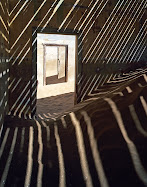
Are there photographer's photographs? Absolutely! If there weren't it would show that no one had really explored the possibilities for the medium beyond bland illustration, beyond the postcard. I feel that the image at the top of this post might well fall into the category of photographer's photograph. The only downside that I can see is that these images are probably less commercial than ones that are more straightforward.

Saturday, 24 November 2007

No post for ages then they all come at once...

For me photography is a voyage of exploration. I believe that we all start with a sense of enquiry, a sense of wonder at our chosen subject. The voyage that we embark on is to discover the limits of what we know about technique, to explore the subjects that we photograph and, perhaps, to open up the unknown territory of our spirit.

I was recently asked by Eddie Ephraums to look at a book that reflected the journey to date of a photographer who I have witnessed at first hand grow from unskilled novice to someone who now taking his first unsupported steps on his personal voyage of exploration. The book is called “Writing with Light” and contains the work of Sami Nabeel. It prompted me to think how a photographer might make the journey from “taker” to “maker” of photographs, from technically competent illustrator to expressive photographer as Sami has.

If I had been writing about this journey at almost any other time in the last couple of thousand years there would have been a well trodden route that the artist would have followed, from indentured apprentice to craftsman and, for the gifted few, on to acknowledged master. But no such clear-cut path exists today. The vast majority of people, like Sami and many of my readers, who would call themselves photographers have “proper” day jobs. Photography is something that they are driven to do in the nooks and crannies of their lives, in the gaps between work and family commitments. It would be impossible for most to give up a regular income in order to pursue photography full time. You may have noticed that I make no distinction between amateur and professional photographer. Like any other artistic endeavour, the title “photographer” is one earned by achievement rather than one achieved by earnings.

With little chance of an apprenticeship the two ways that one might learn one’s craft are by studying the example of “masters” in books or magazines or by interacting with fellow enthusiasts. The problem with either of these approaches is that one needs to receive genuine constructive feedback in order to grow. Studying the printed work of masters only gets us so far. Most books, with notable exceptions, are portfolios or technical “how to” treatises rather works that aim to provide answers to why an image was made. Without a dialogue to explain the difficulties they encountered and their approach to finding a solution all we can really do is admire the result.

In the case of the popular camera press things are even worse. The percentage of good work is quite low and genuine critical frameworks are almost entirely absent. The approach more often undertaken by the staffers vacillates between meaningless epithets and snide criticism. I doubt that many staff writers actually give much thought to what might constitute a meaningful critique. Most are journeymen who concentrate on simple narrow matters of technique, that can be learned by rote, and opt for cheap attacks to hide the depth of their ignorance. One UK photo magazine in particular had a long running series where two of the staffers adopted the good cop/bad cop position of alternately praising to the heavens and then tearing the photograph apart. What this was supposed to teach anybody who contributed an image to this futile exercise is beyond me.

Seeking opinions on our work from our peers can be useful. The developing photographer might turn to camera clubs or the Internet and in theory these should provide them with much needed feedback. The main problem here is one of finding the golden ingots of wisdom hidden below the dross. Feedback from Internet forums is often patchy, with either too many opinions on offer or none at all. Sadly, once again, the opinions tend to lack any rigour. Being told that your image is “great” or “crap” or (the worst of all) “nice” doesn’t help you progress. It seems to me that for visual artists photographers in general (and sweeping generalizations are always good!) have an extremely poor insight into why some images work and others don’t. Most avoid thinking about such questions by literally hiding behind the camera. They focus on the technology and don’t ask why they’re making images or what those images might be telling us. Others avoid asking such questions by resorting to the, “It’s all a matter of taste” argument. Postmodern art has been built entirely on this shaky foundation. Despite everything that such artists say, most of which is deliberately obfuscate, art isn’t art just because the artist says it is. It’s no good just saying “It’s Art, innit.” Opinions in art, just as much as in any other field, need to be backed by reasoned arguments. Modernism firmly defined the artist’s role as searching for self-expression but this is meaningless without insight into one’s opinions and the maturity to articulate them. You have to have something to express. Some years ago, Joe Cornish and I were discussing our landscape photography peers (men do gossip) and noted that none were less than forty years of age. At the time we had no real explanation for this. But I now think that it’s a simple case of needing to have had considerable experience of the landscape before one can make significant images. One can master the technology very quickly but a meaningful connection to the landscape can only come with experience. And experience can only come with time spent in the field.

The general lack of a prescribed direction means that many photographers struggle alone for years before they find their way beyond illustration. There may not be the recognised apprenticeships of old but photographers can still seek mentors. This is the role that I and some other photographers seek to fulfil for students by leading workshops. When I began teaching photographic workshops I had no idea how involved I would become in the photographic journeys of my students. Seeing how students grow in confidence and find their own voices has been both a revelation and a deeply rewarding experience for me. For most students the journey that they undertake is quite modest; they wish to master the equipment so that they might make a faithful “copy” of a landscape that inspires them. For others it is a much longer and harder journey: one of constantly trying to fill in the blank areas on the map of their knowledge.

However much the journey varies two things are absolutely clear to me; the student needs to make a serious commitment and they have to believe in themselves. It takes considerable time and energy for the student to find the route to move beyond simple illustration. Even with the outside assistance of a mentor they still need to act as pathfinder through their own jungle of possibilities. All I or any other mentor can do is try to steer them in the right general direction – a little like saying, “Just head west.” It might help in the end but there will certainly be sticky moments along the way. The terrain that they traverse will to some extent dictate their path. There may be ravines that they cannot cross, deep problems to which they have no answer. The mentor can suggest ways to bridge the gap or alternate paths but once again the exact route is for the student to find. They may find pleasant meadows where they wish to linger, but they should be cautious of the easy life. This may lead to complacency and a lack of progress. As I’ve opined before, the life of a photographer is much more akin to that of a hunter-gatherer rather than a farmer. We need to constantly move on and find fresh game.

When I said that the photographer needed confidence to successfully complete their passage from “taker” to “maker” I didn’t mean that they needed to be cocky. They need quiet self-belief that they can manage the journey; self-criticism is essential but they need to be careful that it doesn’t deteriorate into self-doubt. It is easy to remain in the shadow of those who have preceded us – indeed a poor mentor will prevent you from leaving their shadow. The photographer needs confidence that what they have to say is worthwhile if they are to move beyond making banal and vacuous pastiches of our photographic heroes images. A major part of what the mentor does is to provide them with this confidence.

So, what of Sami’s personal journey? When I first met Sami in 2003, he had a 5x4 camera but was struggling with its basic operation. He very quickly mastered the camera but this was only the first and in some ways least significant step. He then began to explore what he wanted to express in his photography. There were many dead ends and false starts, images that failed to meet his critical expectations, but bit-by-bit he began to develop a vision of his own. Four years is an astonishingly short period in the artistic journey of a landscape photographer but he has travelled a very long way since those first hesitant steps. I hope that he still feels, as I do about my own work, that there is still a long way left to travel. The day that we feel we have arrived is the day that the journey ends, the day to turn our back on photography. What keeps us exploring is the quest for unknown territory; looking for ways of seeing that are new to us, images that surprise and delight us. My own journey has been filled with unexpected twists and turns and I pray that it continues to surprise me. If I have taught Sami anything I hope it is that it is better to travel than to arrive.