Workshop at Linhof & Studio

Paula and I will be running another LF workshop in Leigh on Sea in spring 2008. Details will be posted on the Linhof website in due course or if you just can't wait contact Paula on +44(0)1702 716116 for further details and to reserve a place.
Showing posts with label USA. Show all posts

Saturday, 24 November 2007

Now for some shameless self-promotion...

I've been persuaded to produce a hardback version of my next book, Landscape Beyond, in a limited edition of 500. This will only be available by mail order from me or via Eddie's Envisage Books and final pricing has still to be worked out.

I will also be having my first London exhibition in conjunction with my good friend Anna Booth. Our images will be on view at the OXO Gallery on the South Bank from April 22 to 27 2008. More details on this as we get nearer the time...
No post for ages then they all come at once...

For me photography is a voyage of exploration. I believe that we all start with a sense of enquiry, a sense of wonder at our chosen subject. The voyage that we embark on is to discover the limits of what we know about technique, to explore the subjects that we photograph and, perhaps, to open up the unknown territory of our spirit.

I was recently asked by Eddie Ephraums to look at a book that reflected the journey to date of a photographer who I have witnessed at first hand grow from unskilled novice to someone who now taking his first unsupported steps on his personal voyage of exploration. The book is called “Writing with Light” and contains the work of Sami Nabeel. It prompted me to think how a photographer might make the journey from “taker” to “maker” of photographs, from technically competent illustrator to expressive photographer as Sami has.

If I had been writing about this journey at almost any other time in the last couple of thousand years there would have been a well trodden route that the artist would have followed, from indentured apprentice to craftsman and, for the gifted few, on to acknowledged master. But no such clear-cut path exists today. The vast majority of people, like Sami and many of my readers, who would call themselves photographers have “proper” day jobs. Photography is something that they are driven to do in the nooks and crannies of their lives, in the gaps between work and family commitments. It would be impossible for most to give up a regular income in order to pursue photography full time. You may have noticed that I make no distinction between amateur and professional photographer. Like any other artistic endeavour, the title “photographer” is one earned by achievement rather than one achieved by earnings.

With little chance of an apprenticeship the two ways that one might learn one’s craft are by studying the example of “masters” in books or magazines or by interacting with fellow enthusiasts. The problem with either of these approaches is that one needs to receive genuine constructive feedback in order to grow. Studying the printed work of masters only gets us so far. Most books, with notable exceptions, are portfolios or technical “how to” treatises rather works that aim to provide answers to why an image was made. Without a dialogue to explain the difficulties they encountered and their approach to finding a solution all we can really do is admire the result.

In the case of the popular camera press things are even worse. The percentage of good work is quite low and genuine critical frameworks are almost entirely absent. The approach more often undertaken by the staffers vacillates between meaningless epithets and snide criticism. I doubt that many staff writers actually give much thought to what might constitute a meaningful critique. Most are journeymen who concentrate on simple narrow matters of technique, that can be learned by rote, and opt for cheap attacks to hide the depth of their ignorance. One UK photo magazine in particular had a long running series where two of the staffers adopted the good cop/bad cop position of alternately praising to the heavens and then tearing the photograph apart. What this was supposed to teach anybody who contributed an image to this futile exercise is beyond me.

Seeking opinions on our work from our peers can be useful. The developing photographer might turn to camera clubs or the Internet and in theory these should provide them with much needed feedback. The main problem here is one of finding the golden ingots of wisdom hidden below the dross. Feedback from Internet forums is often patchy, with either too many opinions on offer or none at all. Sadly, once again, the opinions tend to lack any rigour. Being told that your image is “great” or “crap” or (the worst of all) “nice” doesn’t help you progress. It seems to me that for visual artists photographers in general (and sweeping generalizations are always good!) have an extremely poor insight into why some images work and others don’t. Most avoid thinking about such questions by literally hiding behind the camera. They focus on the technology and don’t ask why they’re making images or what those images might be telling us. Others avoid asking such questions by resorting to the, “It’s all a matter of taste” argument. Postmodern art has been built entirely on this shaky foundation. Despite everything that such artists say, most of which is deliberately obfuscate, art isn’t art just because the artist says it is. It’s no good just saying “It’s Art, innit.” Opinions in art, just as much as in any other field, need to be backed by reasoned arguments. Modernism firmly defined the artist’s role as searching for self-expression but this is meaningless without insight into one’s opinions and the maturity to articulate them. You have to have something to express. Some years ago, Joe Cornish and I were discussing our landscape photography peers (men do gossip) and noted that none were less than forty years of age. At the time we had no real explanation for this. But I now think that it’s a simple case of needing to have had considerable experience of the landscape before one can make significant images. One can master the technology very quickly but a meaningful connection to the landscape can only come with experience. And experience can only come with time spent in the field.

The general lack of a prescribed direction means that many photographers struggle alone for years before they find their way beyond illustration. There may not be the recognised apprenticeships of old but photographers can still seek mentors. This is the role that I and some other photographers seek to fulfil for students by leading workshops. When I began teaching photographic workshops I had no idea how involved I would become in the photographic journeys of my students. Seeing how students grow in confidence and find their own voices has been both a revelation and a deeply rewarding experience for me. For most students the journey that they undertake is quite modest; they wish to master the equipment so that they might make a faithful “copy” of a landscape that inspires them. For others it is a much longer and harder journey: one of constantly trying to fill in the blank areas on the map of their knowledge.

However much the journey varies two things are absolutely clear to me; the student needs to make a serious commitment and they have to believe in themselves. It takes considerable time and energy for the student to find the route to move beyond simple illustration. Even with the outside assistance of a mentor they still need to act as pathfinder through their own jungle of possibilities. All I or any other mentor can do is try to steer them in the right general direction – a little like saying, “Just head west.” It might help in the end but there will certainly be sticky moments along the way. The terrain that they traverse will to some extent dictate their path. There may be ravines that they cannot cross, deep problems to which they have no answer. The mentor can suggest ways to bridge the gap or alternate paths but once again the exact route is for the student to find. They may find pleasant meadows where they wish to linger, but they should be cautious of the easy life. This may lead to complacency and a lack of progress. As I’ve opined before, the life of a photographer is much more akin to that of a hunter-gatherer rather than a farmer. We need to constantly move on and find fresh game.

When I said that the photographer needed confidence to successfully complete their passage from “taker” to “maker” I didn’t mean that they needed to be cocky. They need quiet self-belief that they can manage the journey; self-criticism is essential but they need to be careful that it doesn’t deteriorate into self-doubt. It is easy to remain in the shadow of those who have preceded us – indeed a poor mentor will prevent you from leaving their shadow. The photographer needs confidence that what they have to say is worthwhile if they are to move beyond making banal and vacuous pastiches of our photographic heroes images. A major part of what the mentor does is to provide them with this confidence.

So, what of Sami’s personal journey? When I first met Sami in 2003, he had a 5x4 camera but was struggling with its basic operation. He very quickly mastered the camera but this was only the first and in some ways least significant step. He then began to explore what he wanted to express in his photography. There were many dead ends and false starts, images that failed to meet his critical expectations, but bit-by-bit he began to develop a vision of his own. Four years is an astonishingly short period in the artistic journey of a landscape photographer but he has travelled a very long way since those first hesitant steps. I hope that he still feels, as I do about my own work, that there is still a long way left to travel. The day that we feel we have arrived is the day that the journey ends, the day to turn our back on photography. What keeps us exploring is the quest for unknown territory; looking for ways of seeing that are new to us, images that surprise and delight us. My own journey has been filled with unexpected twists and turns and I pray that it continues to surprise me. If I have taught Sami anything I hope it is that it is better to travel than to arrive.
Long time no post...

Where did two and a half months (since my last 'serious' post) go to?!? Perhaps I'm just having a senior moment... but, no. I do recall. Since I last visited you and the other reader I have been engaged in various projects for Light & Land as well as finishing off work on my next book Landscape Beyond.

The text for this was finished back in August but the final image selection and layouts weren't completed until late October. I'm relieved to say that it has now gone off to the printers – though not as relieved as the tireless Eddie Ephraums who has done a sterling job despite my interference/involvement in all stages of the process.

So, how do I feel about my new baby? Well in some respects I think that I'm still too close to it to judge properly. I'm reasonably pleased with the images but don't feel that I can really judge the text yet. I think that this book is more personal than Landscape Within and I felt more outside my comfort zone than when I wrote LW. I owe a big thank you to Eddie for the inspiration for the book. When he and I first sat down to talk about my "difficult second album" he asked me to name the three attributes that I felt essential in the creation of a great landscape photograph. I surprised myself by instantly responding, "Simplicity, mystery and beauty." And a book concept was born. Of course the tricky part was writing the text...

The images used were largely already made. I like to approach the making of a book with a set of images from my 'library' rather than shooting to illustrate the text. I find that this suits me for a number of reasons. Firstly, I'm not the most prolific photographer and the idea of making a set of images to order is frankly very scary. Secondly, because the images aren't meant to be literal illustrations of the text but to stand as works on their own there really isn't the need to shoot specifically to fulfill the brief. For me, the words and images work together and separately, they are interleaved but distinct.

The inspiration for each of my images comes from the circumstances of its making rather than from some grand plan. In fact I find it more or less impossible to make anything other than bland illustrations if I have an external structure imposed before I make an image. Some might see this as a weakness: it means that I feel unable to work on image series. I tend to feel that my photographic work to date is in a sense one very large series charting my explorations in photography. There are many examples of artists having periods working on the same or similar subjects (Picasso's Blue Period is perhaps the most famous) and I do this too. I make series inadvertently (and each image is widely separated in time) because I have a 'weakness' for certain subjects such as ferns or windows. I often worry that rather than working through my approach to a topic I might simply be pointlessly repeating myself. Yet, just when this feeling gets really strong I usually find some new approach and reveal something new to myself and hopefully whoever views the images. Perhaps I should go away and think on this some more...

In between work on the book I've made two trips across the pond to visit the Canadian Rockies in September and Montana & Wyoming. Both were reasonably successful photographically (the image above was made at Biscuit Basin in Yellowstone) and I'll write more on them in future posts.

Sunday, 3 June 2007

To paraphrase Edwin Starr, "Art, huh, what is it good for?"... (Part One)

I've spent quite a long time as a photographer pondering on the nature of Art; just what is Art? And specifically I've been seeking to find photography's place in the wider world of Art: not to mention justifying it as Art to a few people! But in the last few weeks (and some might say this is a little late in the day) I've begun to ponder not, "What is Art?" but rather "What should it do?"

I guess the reason it has taken me so long to get around to asking this question is that I was always comfortable with what Art (read photography) did for me. More than that it was bloody obvious! Making photographs allowed me to express myself and viewing Art taught me about other ways of seeing. But what does my photography do for other people? What is the use of Art to society as a whole?

Time was, before photography, before the Avant Garde and Modernism, that Art in the Western world served as a kind of social glue. Paintings and sculpture were used to disseminate throughout society the ideas of the social elite, be they secular or religious leaders. Works of Art contained both explicit and hidden allegorical meanings, often referring to Biblical or Greek sources. There were great Artists but they were subordinate to Art, gifted interpreters and innovators but never the Source of Art.

Then along came Modernism... And Western Art split into a thousand movements, each with their own agenda, each with their own view, each more inward looking than the last. Ultimately Art in the Modernist era became about the individual, it became a celebration of the unique vision of the gifted Artist. Art was whatever an Artist said it was. You might be forgiven for thinking that this was a liberating advance, a break away from the stranglehold of the ruling elite, a chance for us all to have our say. But I don't think it quite worked out like that...

Art for Art's sake became a joke, a practice so inward looking that it disappeared up it's own fundament. Society as a whole came to distrust Modern Art, it was viewed as an elite club that had turned its back on the rest of us. Only Artists could understand Art so why bother to talk to the Great Unwashed? Capitalism seized the opportunity offered by Art's fractured disarray to commoditize it. As Andy Warhol knowingly pointed out, Art had become just another good like Campbells Soup. A proliferation of brands followed, artists who actually made a living from their works climbed from a few hundred across the entire US in the 1950's to thousands in New York City alone by the mid 1980's. One has to ask what benefit did this explosion of expression do society as a whole?

But the Modernists didn't get it all there own way; another "M'ism" had a lot to say about what Art's purpose should be. Marxism held that Art's job was to shed light on human existence; to explain and, at the same time, ease our pain. Artists, such as the Abstract Expressionists, who turned inward, offering no commentary and excluding references to the outside world, were exhibiting the worst kind of decadent behaviour in the eyes of the Marxists. All very worthy but is human existence solely concerned with our relationships with other human beings? The answer is plainly no, so surely Art should have a wider remit.

I believe that there must be room for a middle path between the solipsism of Modernism and the Marxist directive for Art to concentrate on the social world. Surely these are just different forms of anthropocentrism, both equally self-centred. What's wrong with Art looking at the natural world. Not the capitalised, mystical Nature celebrated by Ansel Adams et al but simply the environments that gave birth to Humanity. The natural world is held in common and offers a much wider realm than mankind. It surely can't be true that Art has exhausted the possibilities for exploration and expression encompassed by the planet around us.

There are moments when I'm standing waiting to make an image when I feel completely connected to the world around me; connected to the soil or rock at my feet, connected to the air moving across my body, connected to the birds flying through the air. Those moments are what I seek to capture in my images, to share them with a wider audience and hopefully to evoke a response in return. I make my images for me but not because I want to be inward looking. The work of an artist must be intensely personal if it is to carry any force but it doesn't have to be exclusive.

I'm not sure that I've come to a definitive answer about "What should Art do?" but I think I can definitely make a stab at explaining its role for me. Art shouldn't become so wrapped up in its own concerns that it becomes incomprehensible to a wider audience, it should be inclusive and not alienating, it should express the feelings and ideas of the Artist and, at its best, it should change how we see the world around us. Quite a wish list but one I'm happy to try and aspire to.

Edwin Starr's famous song continued with, "Absolutely nothing, say it again!" This might have applied to Art under the reign of Modernism but I think it's time we claimed it back for a populist audience.

See Part Two here

Saturday, 28 April 2007

Egoist or egotist...

One of my readers recently said to me that she felt that my images and Joe Cornish's images had no trace of our ego in them. I was puzzled by this comment so I asked her to expand upon her thesis.

As I understand it (and please let me know if I'm wrong – you know who you are!) she meant that the photographic message wasn't being distorted by our egos; that he and I weren't being vain or showing off, but simply trying to convey our feelings about the subject in hand to a wider audience. And furthermore, that this selfless approach gave our images clarity and veracity.

I'm not at all sure that what I do is selfless, in fact I'm fairly certain that, from my perspective, it's the ultimate selfish act. What I'm trying to do, first and foremost, when I make a photograph is to express my feelings about a subject. I can hope that others may like my work but ultimately I make all my images for me. And what makes me share them with others is another selfish desire.

After the creative urge, one of the deepest desires of an artist is to be praised by one's audience, to be recognised for one's work by one's peers, to be patted on the back – in short, to have one's ego well and truly massaged! This is of course also the reason that we find external criticism of our work so difficult; when someone attacks our work they are attacking our personalities at the deepest level. An artist's images are an expression of their inner self. So saying that an image is rubbish isn't at all the same as saying that you hate the cut of their clothes or even that you hate the colour of their hair. These physical manifestations (even though the latter might have a fundamental genetic link!) are only about surface, mere appearance. You can always change your tailor or buy some hair dye but saying an image is poor is an attack on our ego, the very basis of our being.

John Szarkowzki, the American photographer and former Museum of Modern Art curator, organised an exhibition entitled "Mirrors and Windows" at MoMA in New York in 1978. His premise for the exhibition was that all photographs are either "mirrors" of the photographer's concerns or "windows" onto the world. The first are more likely to be concerned with abstract ideas about the world, to fall into what one might call Art, and the latter concerned with seemingly plain descriptions of the world, to fall into what might be termed Documentary.

I would contend that images cannot simply be one or the other, but rather must be a blend. There is no such thing as a pure documentary photograph. The image is fundamentally linked to reality; it is a partial document of the moment and place at which it was made. But the hand of the photographer when they release the shutter is driven by the mind of the photographer – a notoriously biased influence! Similarly there is no such thing as an image that purely reflects the concerns of the photographer. The audiences' interpretation of an image is derive as much by their viewpoint as by that of the photographer. All photographs cannot help but contain an element of ego and an element of truth.

I would still feel flattered (and nothing appeals more to the ego than flattery!) if my reader felt that I let the subject in any of my images speak more loudly than my own voice. In other words that my style or vision, direct expressions of my personality, were subordinate to the subject. I would feel that I had failed if the photographs screamed "Me, me, me!" to the audience. I want the subject to appear as if one were staring into a limpid pool, to be presented in as pellucid a manner as possible. This might seem contradictory given that I stated right at the beginning that the making of images was a fundamentally selfish occupation for me. But, ironically, photographers are alone in the world of artistic representation in finding that the more transparent their style the greater the reputation they may command as photographers.

Every other visual artist seeks to differentiate their vision from that of others in their field, to proclaim it as unique, by dint of overt stylistic devices; van Gogh's textural application of paint, Rembrandt's glowing depiction of light, Lowry's stick men. But photographers wish to impress upon their audience the fundamental truthfulness of what they have seen. The use of photographic mannerisms, such as obvious filtration or extreme wide angle views, only serve to undermine any claims to veracity. Such mannerisms overtly declare the presence of the photographer when they wish to declare what they have seen as paramount. They want to present their work as a slice of the real world, albeit one that only they were gifted enough to perceive and present to the viewer. The unique voice of the photographer is, necessarily, to be found not only in what they choose to photograph but also in the way that they compose the image.

But the photograph is a trick of the light, a visual sleight of hand. It presents us with the photographer's vision, collapsing all possible viewpoints into their single one, but does it in such a way that we ignore this distillation and adopt their 'real' viewpoint as if it were our own. In this way the photographer almost becomes invisible, it's almost as if in some bizarre way they played no part in the making of the image. Perhaps this is why my reader felt that there was no trace of ego in my images.

The evolutionary theorist Richard Dawkins famously made the claim in the "Selfish Gene" that there's no such thing as altruism, that even a bee that gives its own life to protect the hive is ultimately being selfish. Similarly sharing our view of the world, a product of our ego, isn't being altruistic. If I, as a photographer, can claim not only insight but also veracity for my images then people will think that I'm a better photographer – yet another way for my ego to be massaged. But the ego can be subtle, and in that subtlety others may benefit. Ultimately, it matters not how much a photograph is the product of our ego so long as others can extract some good from viewing it.

Monday, 12 March 2007

A well known spot...

Well, after two days trekking through the wilderness, getting stuck and getting lost, we finally gained our permits from the BLM and were allowed to enter photographic "heaven", Coyote Buttes North. Well, perhaps not exactly heaven but certainly somewhere rich with photographic potential.

The image was made at The Wave, perhaps the most famous site in Coyote Buttes. Heavy rain just 10 days before we arrived had transformed this side canyon into a beautiful reflecting pool. This portion of the wave was made famous as the cover image on Jack Dykinga's wonderful book "Stone Canyons of the Colorado Plateau" but I was very conscious that I should make my own interpretation. It seems to me that the task of an artist is to express how he feels about his subject and to do this in as original a way as possible.

There is a dubious, and perhaps unhealthy, obsession with the naming of locations in photography. Particular places have acquired an almost holy status: Bryce Canyon, Point Lobos, Yosemite or even Dunstanburgh or (the Grandaddy of them all) The Sea of Steps in Wells Cathedral. The Wave is also just such a place. A criticism that was repeatedly levelled at my book, Landscape Within, was that I didn't name the locations of the images. My reasons for this was not because I wished to be protectionist. I wanted the viewer to interpret the image based upon just what they saw – how I had composed the image, my choice of perspective lighting etc. – rather than what they think they already know about a place.

Why the obsession with Place? Perhaps it's because of the strong, ineluctable, bond between the image and reality. A good picture was made at a particular place therefore that's the place to make another good image. The key word here is "another", not the same but a different image.

But I think that this is only part of the reason. This problem of "location worship" had been forcefully brought home to me on a recent workshop when a participant had shown his portfolio of a dozen or so perfectly executed landscape images. The only problem is that they weren't his images – they were technically excellent copies of other photographers' compositions, often shot in the same lighting conditions and same season as the original. I asked him why, when he was obviously a technically competent photographer, he was repeating other people's work rather than making statements of his own? His answer was that his time was short for photography, fitted in between work and family commitments, and that he needed to be sure that he would be able to make an image when he ventured out. This, for me, is no reason at all.

I make images as personal statements and don't wish to redundantly repeat what somebody else has already "said".

There is another side to this location fetish. Many photographers jealously guard information about their favourite locations, something that I suspect some readers of my book thought I was doing by not naming the places. This secrecy, this hoarding of locations, strikes me as extemely paranoid. Both the workshop participant and these hoarders are suffering from crises of confidence, one worries that they can't find images without inspiration from an external source (another "better" photographer). He thought that he couldn't find images of his own because he lacked the confidence to wander, receptive to inspiration, and let the images find him. Whilst, ironically, the location hoarder worries that a "better" photographer might make a better image in "their own" Place.

Self criticism is a vital part of the creative process, we all need to look at the compositions we've made and assess whether each has made the grade. But this necesary self analysis can turn into a deep seated lack of confidence in one's abilities, even amongst well-known and feted photographers. The hoarder shouldn't worry about anyone making a better image. Photography, like all Art, is relative. We can compare one image to another and decide that we prefer one but we cannot say with absolute certainty that one is categorically superior to another. Indeed we may well change our mind, on a different day with the wind blowing in a different direction. Perhaps what the hoarder fears in a profound way is that people will prefer not simply another photographer's viewpoint (and all the elements of composition, light and serendipity associated with that) but actually prefer the other photographer's view of the world. This is a pointless waste of energy for beauty is in the eye of the beholder. To paraphrase Abraham Lincoln "You can please some of the people all of the time, and all of the people some of the time, but you can not please all of the people all of the time."

Sunday, 11 March 2007

The story behind the image...

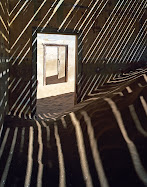
This image was made on a visit to Coyote Buttes in Northern Arizona in November 2006. I was accompanied by two friends, Alex Donnelly and David Whistance. We had failed to get permits online for the north (which includes The (famous) Wave) so we had to go to the Bureau of Land Management (BLM)Ranger station every morning to put our names in the lottery, a 35 mile drive from where we were staying in Page. Our names weren't drawn until the second morning so we decided to explore the south section on the first two days.

The first of these visits was to an area called Cottonwood Cove. I'd never been to Coyote Buttes South (CBS) before but some research beforehand showed that it was just as good as the north though lacking in any "set pieces". No bad thing really as there is more scope for producing something original.

It's a 35 mile drive from Page to the turnoff for the unpaved House Rock Road, then 14 miles on the dirt road (reasonable washboard surface) then turn off onto a narrow sandy track towards the abandoned ranch of Poverty Flats six miles distant (this route had been recommended by a volunteer at the BLM station as the more direct route via Paw Hole was probably impassable due to deep sand). The track was a bit hairy in places, with soft sand and rocky ledges, but we eventually made it to the ranch. Nobody had lived there since the early sixties so there was plenty of photogenic decay to make images of – in my element!

After about an hour, during which I made the image above, we set off for Cottonwood and promptly got stuck in deep sand, about fifty yards from where we had parked. We hadn't seen anybody since we left the House Rock Road and this area is the least visited part of the Wilderness Study Area so we didn't feel at all anxious... Luckily we'd bought shovels and sand ladders – no, of course we hadn't!! We set to with our bare hands to shift sand from under the wheels and put rocks and wood in the ruts for some traction. It was at this point that we discovered that our shiny SUV didn't have any drive shafts at the back – it was 2X4 instead of 4X4. No point complaining to the car hire company as the contract forbade us taking it off road anyway! After about half an hour of digging we heard another vehicle approaching. Salvation we hoped. It was a German guy called Marek who found the whole thing very amusing and proceeded to take lots of digi-snaps of me half buried under the car! He did help dig eventually and we managed to get the car out after about 40 minutes. We asked him what the road was like to Cottonwood and he told us that it was fine, or at least no worse than the ground we had already covered. Suitably reassured we set off for Cottonwood.

You can probably guess what happened next – surprise, surprise we got stuck (again!) We tried to dig the car out for about 50 minutes but only managed to move it about six feet. It was around 14:00 by this time and we had to decide whether to stay with the car or try and walk out. If we followed the road back it would be around 15 miles before we would get to anywhere that we might see somebody else. Alternatively we could cut across country to Coyote Buttes north (CBN) and hope to meet somebody at the Wire Pass entrance as they left around sunset. We knew that there were 20 people in CBN so this was probably our best chance of help. We hadn't seen any more sign of anybody since Marek had left so the alternative was to spend an unknown number of nights waiting with the vehicle. The BLM station had had 14 spare permits out of a possible 20 for Cottonwood after we got ours, so we knew that there couldn't be all that many people around.

We made the decision to walk out via CBN and thought that we would take our camera gear in case we saw something we wanted to photograph en route. We set off up the track and after about a mile came to the crest of the first ridge. It was at this point that we realised the enormity of the task ahead and that we probably wouldn't get a chance to make any images on the way! We could barely see the back of CBN and estimated that it was over 5 miles away. This would make the total distance to walk around 9 to 10 miles across rough terrain, both bare rock and soft sand carrying around 45 pounds each. Aaargh!!

I was feeling very pissed off about getting us stuck, despite assurances from Alex and David that they wouldn't even have got as far as we had if they'd been driving. This was the first time that this had happened to me in 20 years driving to inaccessible places, and I set off at a (grumpy) sharpish pace. In retrospect this was very lucky for us. It took us around three hours to get to The Wave in CBN. We'd only stopped once on the way for about ten minutes breather to eat a snack and drink some water. Sunset was around 17:30 so we knew that we were cutting it fine. There was a small pond in The Wave due to recent heavy rain (the same storm that had wiped out the ladders in Antelope). Alex decided to take his boots off but David and I just waded through. It was a good job that we did as I heard voices as we came out of the canyon on the other side. A couple were just walking past and they told us that they were the last people there! They were amazed that we had walked that far with all our gear and were more than happy to offer us a lift (luckily they had a big enough vehicle parked at Wire Pass). The rest of the walk was reasonably uneventful, though I felt that my legs had turned to lead by the time we reached the dry wash and the last half mile before the car park.

It turned out that our saviors were staying at the same hotel in Page. We offered to buy them dinner in return for their lift and arranged to meet them around 21:00. I went back to my room and had a vigorous shower to remove several pounds of sand from my ears followed by a long soak in the bath. Around 20:30 Alex knocked on my door to say that he'd found somebody to tow the car out for a couple of hundred bucks, the only problem was that they wanted to do it now! It was too good an offer to turn down but as I was the driver on the hire agreement it meant that I would have to forego dinner. The guys that Alex had met were the Navajo guides from Upper Antelope Canyon. I set off with them to pick up a bigger vehicle from the Reservation. I didn't think very much about this until we transferred to the other vehicle and they loaded a lot of equipment on board including jacks, shovels, ropes, and lastly a high powered lamp and a hunting rifle. It suddenly occurred to me that I was driving off into the middle of nowhere with a pocket full of cash and three guys that I didn't really know who also had a gun. The clincher was when then made me where a T-shirt with a target mark on the front – just kidding!

It took about an hour and a half to get back to the car. The Navajos were all really nice guys. Chatting on the way there they said that there was only one towing company in Page. They had had a fire on one of the vehicles that they use to ferry people up the dry wash to the canyon and asked the tow company to quote for removing the vehicle as they couldn't shift it with their trucks. He wanted $800 even though the vehicle was only about half a mile from the main road so God knows how much he would have charged us to pick up our car. I had contemplated telling the car hire company that we had been abducted by aliens and dumped in the middle of the desert but decided that they would probably still charge us a fortune even though they would probably have believed us.

It turned out that there weren't any tow points anywhere on the vehicle so they couldn't just pull it out. They used their shovels to dig away the worst of the sand, lowered the tyre pressures and managed to drive it out, with four of us pushing, within 15 minutes of us reaching the car. A great adventure (in retrospect) but a little worrying at times.

The next day was supposed to be a rest day. Alex had gone off early to put our names in the lottery for permits for CBN. When David and I arrived around 09:30 he was grinning from ear to ear and we rightly assumed that we had got the permits. We decided to spend the day in an area in Coyote Buttes south (CBS) called Paw Hole and had been assured that we would have no difficulty getting there in our vehicle. It was only supposed to be a short walk from the car park but when we left the House Rock Road we found the track quite tricky and bailed out after about a mile because we were (understandably) a little paranoid about getting stuck again. We then had to walk for about 3 kilometers uphill in soft sand. The rock formations were good but nowhere near as impressive as those we had seen on the previous day. We were all fairly tired on the walk back at the end of the day but looking forward to the next day. But that's another story (or post anyway).